HOMBYS / LEARN · PLAN · MAKE · CARE

the Chunky Yarn Journal

Small lessons for softer, longer-loved makes.

Find your yarn ↗
← Back to the journal
How to Care for a Chunky Chenille Blanket

HOMBYS JOURNAL · EDITORIAL GUIDE

How to Care for a Chunky Chenille Blanket

What the care label means, how to support wet stitches, and why gentle drying matters.

Jumbo chenille yarn care editorial illustration

care

A chunky chenille blanket feels wonderfully plush, but its large loops need a little thought when cleaning. The safest routine starts with the yarn label, not with a general rule for every chenille yarn.

1. Read the label before choosing a wash cycle

Save the label from each yarn used in your project. Check the fiber content, washing instructions and drying symbols. If you mixed yarns, follow the most restrictive care instructions. “Chenille” describes a yarn construction; it does not by itself establish which temperature or machine cycle is suitable.

2. Try your routine on a small swatch

Keep a sample made in the same stitch as your blanket. Clean it using the method permitted by the label, then let it dry completely. Compare its size, surface and feel with an unwashed sample. This is especially helpful when combining a dark color with cream or white.

3. Support the whole blanket

A wet chunky blanket can be heavy. Lift it with its weight supported rather than pulling on one corner. Avoid twisting it tightly or stretching the large loops. If the label permits hand washing, handle the fabric gently and use a suitable detergent as directed.

4. Dry in the shape you want to keep

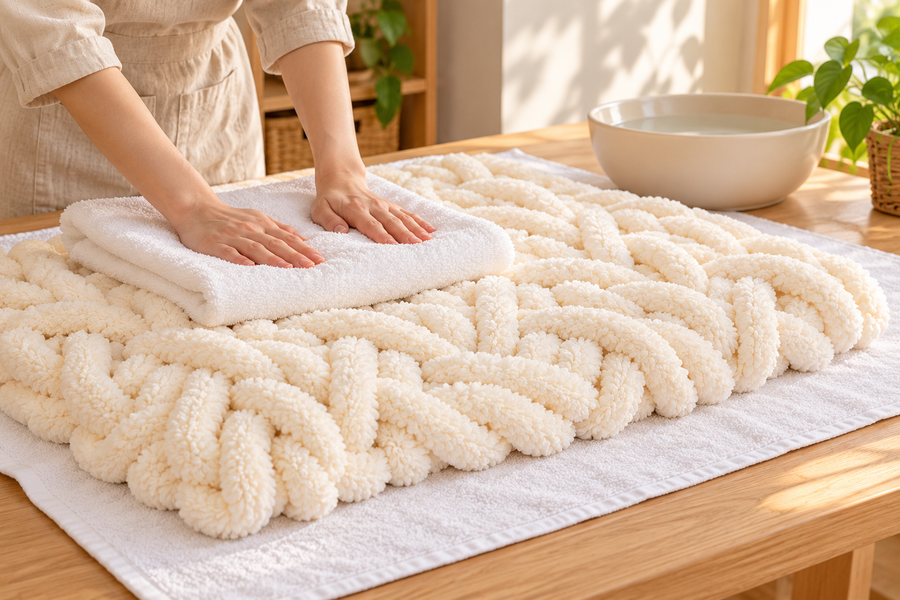
Use the drying method on the label. Where flat drying is permitted, reshape the blanket gently on a clean towel and allow air to circulate. Replace a wet towel when needed. Do not assume that high heat or hanging a heavy wet blanket is appropriate for your yarn.

5. Store it clean, dry and folded

Let every layer dry before storage. Fold the blanket with its weight supported, keep it away from damp areas, and avoid sharp fasteners that may catch the loops. Save the care label with your project notes so your next cleaning day is simpler.

Quick takeaway: check the label, test a swatch, support the fabric and dry it completely.

Further reading: Craft Yarn Council: care symbols.

Explore chunky chenille yarn →
Keep your chunky makes soft in storage

HOMBYS JOURNAL · EDITORIAL GUIDE

Keep your chunky makes soft in storage

Clean, dry, folded—and ready for the next cozy season.

HOMBYS chunky chenille yarn design scene

care

Clean and dry first

Follow the yarn label for cleaning, then let the project dry completely before putting it away.

Fold with support

Fold blankets and other heavy items rather than leaving them stretched over narrow hangers. Keep the storage area clean, dry and away from prolonged direct sunlight.

Protect the loops

Keep rough hook-and-loop fasteners, sharp edges and loose jewelry away from the plush stitches. Do not pull a snag outward; identify the affected loop and redistribute the slack gently through nearby stitches if your stitch structure permits it.

Check between seasons

Inspect for dampness or odors. If anything is damp, remove the piece and resolve the moisture before returning it to storage.

Explore chunky chenille yarn →
8, 16 or 24 Skeins? Plan by Yardage, Not Pack Count

HOMBYS JOURNAL · EDITORIAL GUIDE

8, 16 or 24 Skeins? Plan by Yardage, Not Pack Count

Learn how finished size, stitch choice and a sample swatch help you choose a sensible pack quantity.

Jumbo chenille yarn planning editorial illustration

planning

An eight-skein pack is a shopping quantity, not a finished blanket size. The amount you need depends on the dimensions, stitch pattern, your tension and the length supplied in each skein. Here is a practical way to plan before buying.

Start with the finished dimensions

Write down the width and length of your intended piece. A lap blanket and a large sofa throw can look similar in a photograph while using very different amounts of yarn. Use the pattern’s material list as your starting point when you have one.

Compare length as well as weight

Two skeins can weigh a similar amount yet supply different lengths. Check the selected product and variant. For example, eight skeins at 27 yards each supply 216 yards; eight at 26 yards supply 208 yards. Those totals describe the yarn purchased, not a guaranteed finished size.

Make a representative swatch

Work in the intended stitch with the same yarn and technique you will use for the project. Measure the sample without stretching it. For a closer estimate, record its dry yarn weight and finished area. Use the same units throughout.

A simple estimate, with an honest limitation

Estimated yarn weight = project area ÷ swatch area × dry swatch weight. Divide by the selected skein’s stated weight to estimate skeins. This works best for a flat piece in one consistent stitch. Borders, shaping, joins and color changes need separate allowance; a fitted or shaped project should follow its pattern.

For illustration only: if a 10 × 10 inch sample uses 40 g, a 30 × 40 inch rectangle in the same stitch and tension scales to about 480 g before any extra allowance. This is an arithmetic example, not a HOMBYS blanket yield or a tested pattern.

Turn the estimate into packs

If your own pattern or swatch estimate calls for 12 skeins and the selected listing contains eight per pack, you would need two packs, receiving 16 skeins. Check each color separately for a color-block project; do not simply divide the total equally between colors.

Before checkout: confirm the color, yards per skein, skeins per pack and quantity of packs. Where dye lots are supplied, plan matching yarn together.

Further reading: Craft Yarn Council: yarn labels and gauge.

Explore chunky chenille yarn →
Before Your First Jumbo Chenille Project

HOMBYS JOURNAL · EDITORIAL GUIDE

Before Your First Jumbo Chenille Project

A friendly checklist for choosing a first pattern, gathering tools and keeping oversized stitches even.

Jumbo chenille yarn beginner editorial illustration

beginner

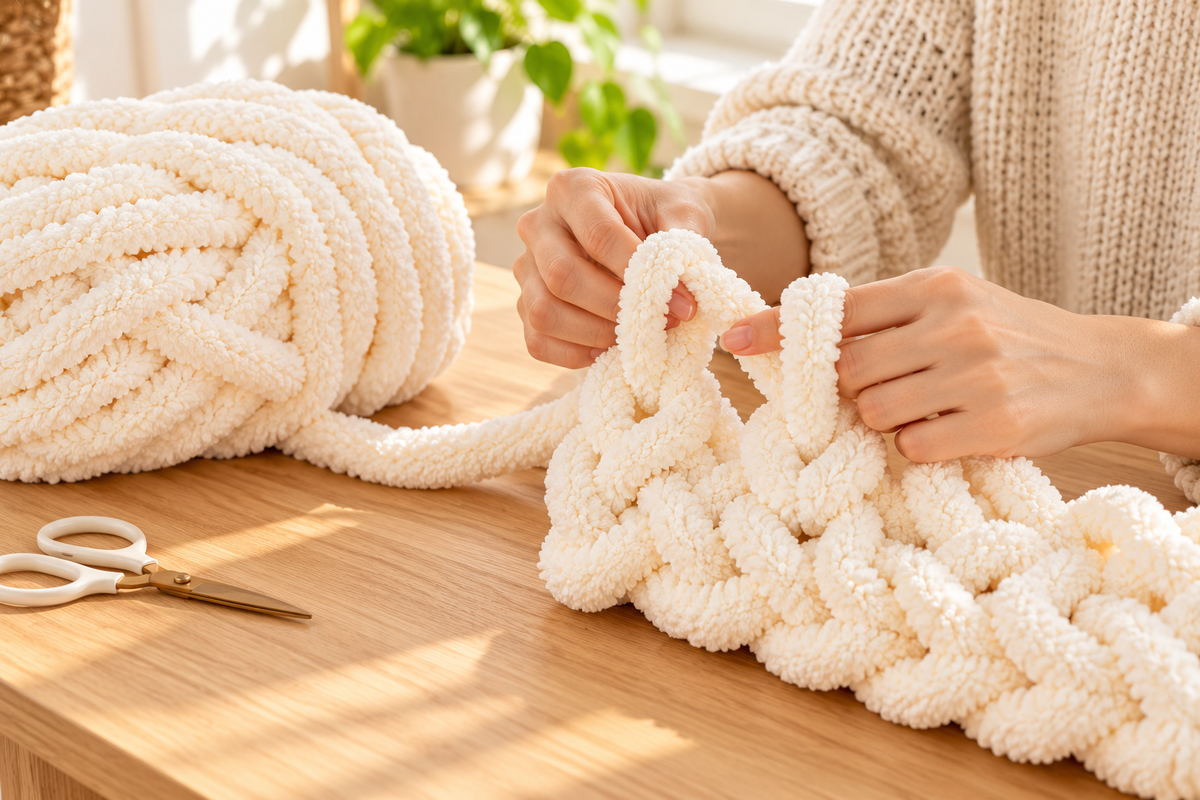
Big, soft stitches make jumbo chenille inviting to try. A little preparation lets you spend more time making and less time undoing. Start with a small, flat project and learn how your yarn behaves before committing to a large blanket.

Choose a manageable first pattern

Look for a simple rectangle with a repeated stitch and clear instructions. A sample square or small mat can teach casting on, working rows and finishing. A photo is inspiration; a pattern should also tell you the stitch, dimensions, materials and finishing steps.

Match the yarn to the technique

Read the actual product’s yarn length and care instructions. Some patterns use fingers; others specify a hook or needles. If tools are required, begin with the pattern’s recommendation and check the gauge rather than choosing a tool from the yarn’s appearance alone.

Gather only what you need

  • The yarn and any tools specified by your chosen pattern.
  • A measuring tape and scissors for the finishing steps.
  • Stitch markers if the pattern uses them, plus a method for counting rows.
  • A clean, smooth working surface and a place to keep the yarn from snagging.

Make a small test piece

Practice the stitch and count the loops at the end of every row. Lay your sample flat without stretching it. Notice how large loops differ from tighter ones and aim for a steady, comfortable tension. Keep the sample with the label and notes about the technique.

Pause before the last skein

Measure your progress and compare it with the pattern. Leave enough yarn for the remaining rows and finishing method. If you change dimensions or add stripes, revisit the quantity plan before continuing.

Finish with care

Use the pattern’s joining and finishing instructions, secure ends and inspect the whole piece for loose loops. For toys, pet items or gifts for children, choose a suitable pattern and assess its materials and construction for the intended use; a decorative project photo alone does not establish suitability.

Your first goal: learn a repeatable stitch, make a small finished piece and record what worked. The bigger project can come next.

Further reading: Craft Yarn Council: yarn label information.

Explore chunky chenille yarn →
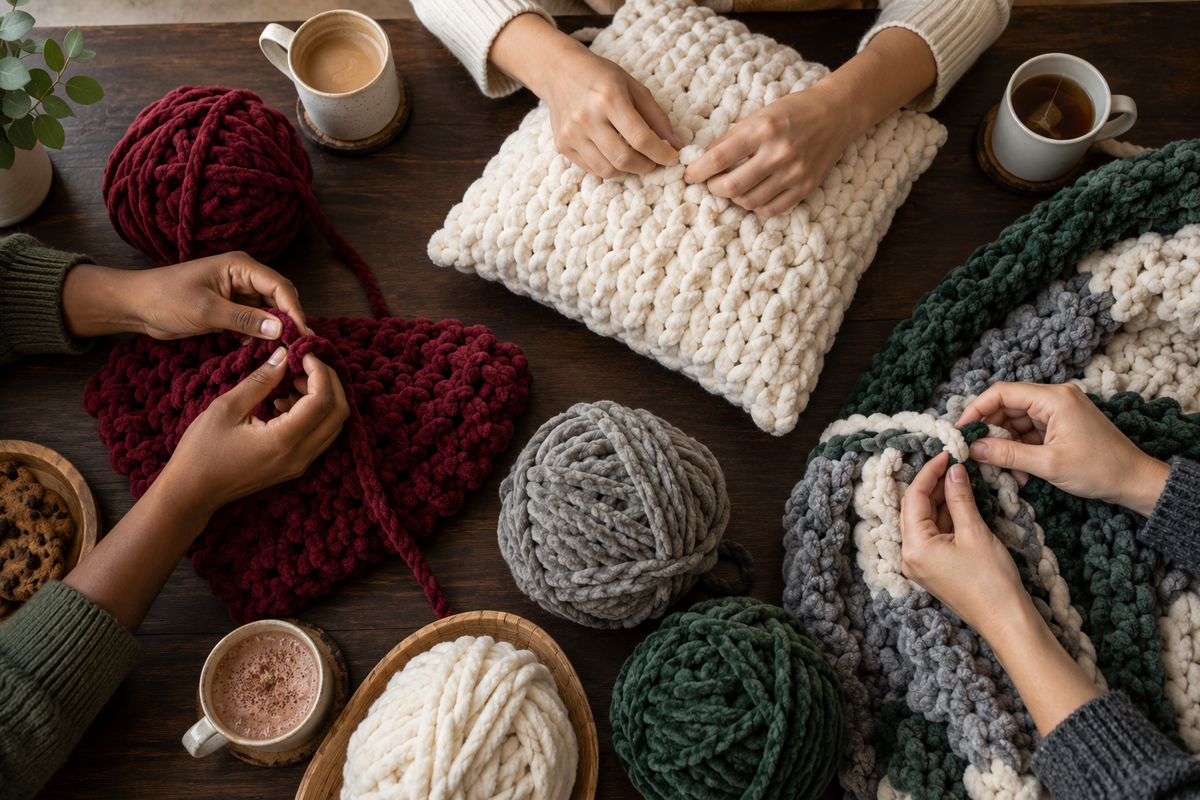
Build a color palette you will love

HOMBYS JOURNAL · EDITORIAL GUIDE

Build a color palette you will love

A main shade, a supporting color and a little contrast.

HOMBYS chunky chenille yarn design scene

planning

Start with where it will live

Look at the room, clothing or gift recipient the project is intended for. Choose a main shade you would enjoy seeing in that setting.

Keep the first palette simple

Two or three shades are easier to plan than a large number of colors. Use a neutral as a bridge between stronger shades if that suits your design.

Check proportions

A striped blanket may use much more of its main color than its accent color. Divide the pattern’s estimated yardage by color before choosing mixed packs.

Make a small test

Work a swatch with all planned colors. Lighting, screens and dye lots affect appearance; the swatch is a better guide to the finished combination than individual online photos.

Explore chunky chenille yarn →
Why 26, 27 and 31.7 yards matter

HOMBYS JOURNAL · EDITORIAL GUIDE

Why 26, 27 and 31.7 yards matter

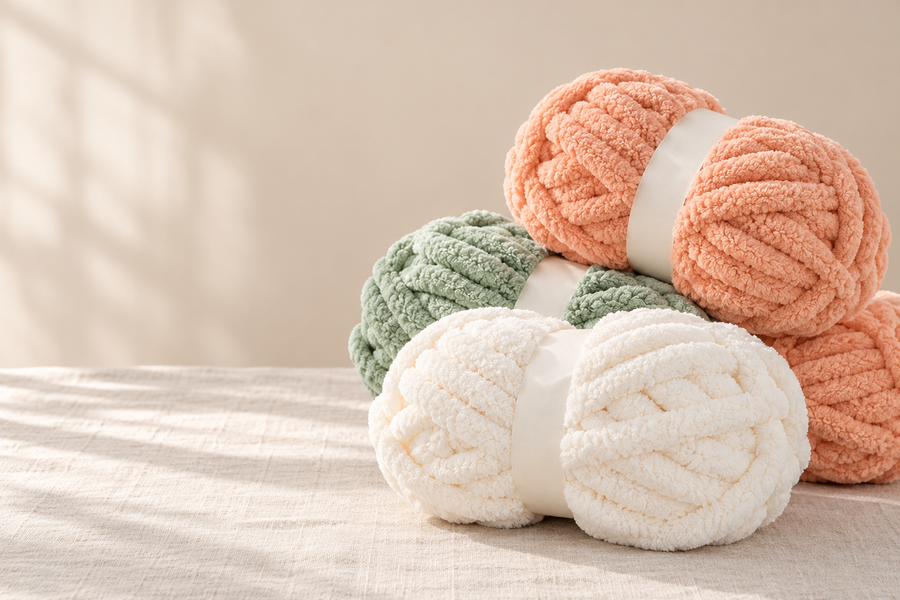
Read the yarn length before comparing packs.

HOMBYS chunky chenille yarn design scene

planning

Use total length for planning

The number of skeins tells you how many units are in the pack, but length tells you more about how far the yarn may go. Multiply skeins per pack by length per skein.

Weight is another measurement

Do not treat an 8-ounce skein and a 7.5-ounce skein as interchangeable without checking the length, thickness and pattern gauge.

Match the project

When substituting yarn, check the fiber, construction, yarn size and gauge as well as total length. Similar-looking chenille can behave differently in a particular stitch.

Keep a project note

Record the exact listing, shade, pack size and length used so you can make a useful comparison if you buy again.

Explore chunky chenille yarn →
What tools do you need for chunky yarn?

HOMBYS JOURNAL · EDITORIAL GUIDE

What tools do you need for chunky yarn?

Choose tools for your technique, then gather a few finishing essentials.

beginner

Start with the technique

For finger knitting, your hands form the stitches. For needle knitting or crochet, use the tool size recommended by your pattern and check it against the yarn label. A jumbo yarn does not mean every pattern uses the same needle or hook.

A simple project checklist

Prepare sharp scissors, a measuring tape and a way to mark rows or stitch changes. If your pattern calls for a yarn needle, choose one with an eye large enough for your chenille yarn. Keep the yarn labels so you can check shade, length and care instructions.

Check the extras before you buy

A pillow may need an insert; a bag may need handles or a lining. Plushies and pet projects can need other materials specified by the original designer. Read the full materials list before ordering yarn.

Make a small swatch

Use your planned technique and tools to make a practice square. Check the feel and finished size, then follow your pattern to estimate yarn by color.

Explore chunky chenille yarn →